

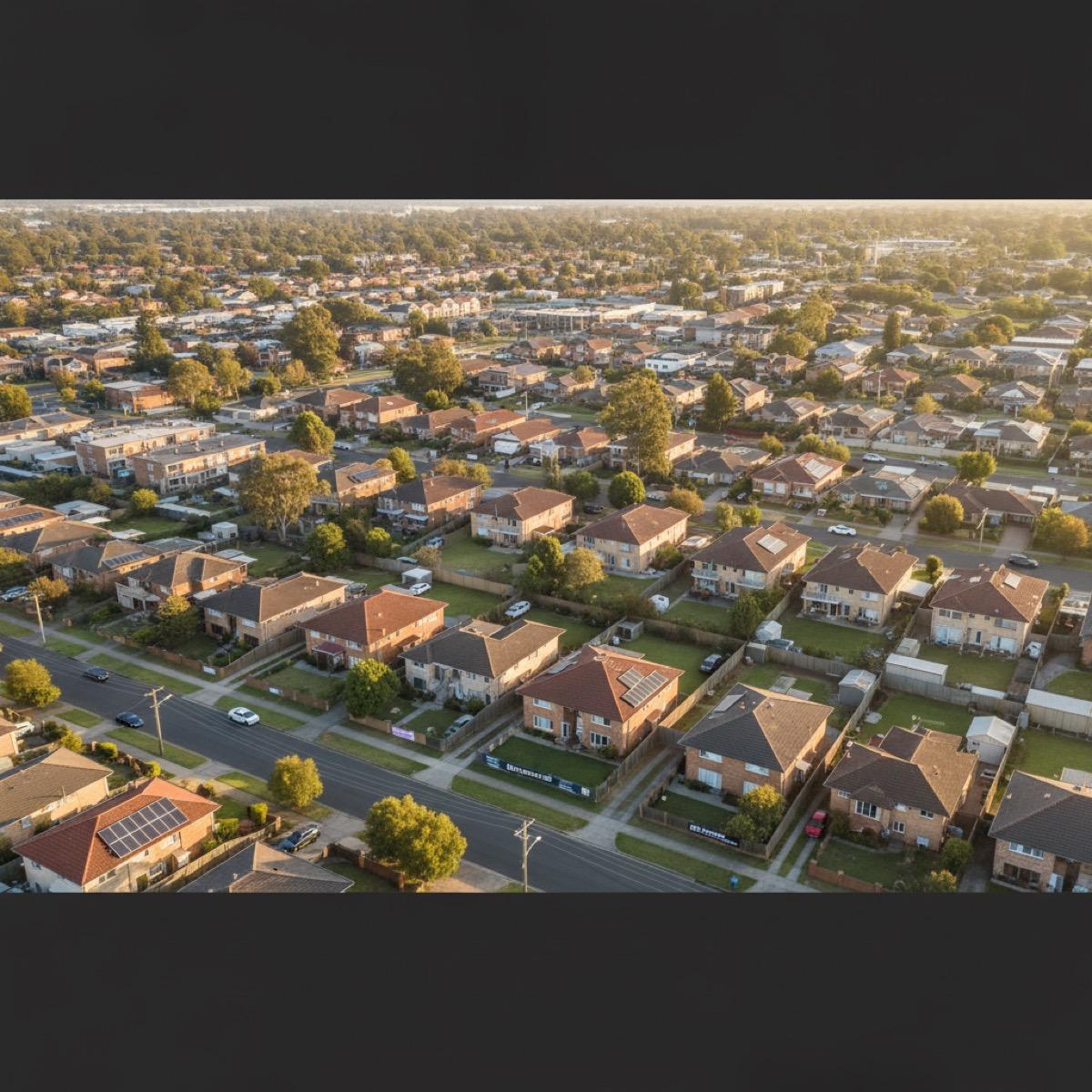
How Picki Estimates Rental Income: The Data Behind the Numbers
📊 TL;DR - Key Takeaways
- Picki uses a three-layered approach: Census data + live listings + AI analysis
- We calculate at the SA1 level (smallest geographic unit) for hyper-local accuracy
- Rental estimates can differ from reality by 5-15% due to property-specific factors
- Estimates are more accurate for common property types (3-bed houses, 2-bed units)
- Use estimates as a starting point — always validate with recent local listings
Why Rental Income Estimation Matters
For property investors, rental income is everything. It determines:
- Gross yield (return on investment)
- Cash flow (can you afford to hold the property?)
- Borrowing capacity (banks use rental income to assess serviceability)
- Tax position (rental income affects deductions)
But estimating rental income for a property before you buy it is tricky. You can't just look at the median suburb rent — every property is different.
That's where Picki's rental estimation engine comes in.
The Three Data Layers Picki Uses
Picki's rental income estimates combine three data sources, each with different strengths and weaknesses:
Layer 1: ABS Census SA1 Rental Data
What it is: The Australian Bureau of Statistics conducts a national Census every 5 years. One of the data points collected is weekly rent paid, broken down by SA1 (Statistical Area Level 1) — the smallest geographic unit (typically 200-800 dwellings).
Strengths:
- Comprehensive (captures ~95% of rental properties)
- Hyper-local (SA1 level means street-by-street accuracy)
- Stratified by bedrooms, property type, and tenure
Weaknesses:
- Only updated every 5 years (most recent: August 2021)
- Lags current market by 3-5 years
- Doesn't capture property condition, features, or recent renovations
How Picki uses it: Census data provides the baseline. We take the SA1 median rent for the property's bedroom count and type, then apply growth adjustments using market data.
Example: A 3-bed house in Brunswick's SA1 20610112409 had a Census median rent of $520/week in August 2021. As of March 2026, we apply a 17.3% adjustment based on Melbourne's rental growth, giving an estimated $610/week.
Layer 2: Live Market Listings (Domain, REA, PropTrack)
What it is: Real-time rental listings scraped from major property portals (Domain, realestate.com.au, others). We track:
- Advertised rent
- Property features (bedrooms, bathrooms, parking, land size)
- Days on market
- Listing status (available, leased, withdrawn)
Strengths:
- Up-to-date (refreshed weekly)
- Captures current market sentiment
- Includes property-specific details
Weaknesses:
- Advertised rent ≠ achieved rent (properties often lease below asking)
- Selection bias (only properties currently listed, not the full market)
- Data gaps in low-volume suburbs (under 10 listings/month)
How Picki uses it: We aggregate listings within a 1km radius of the target property, filter by comparable features (bedrooms, property type), and calculate the market-adjusted rent range.
If there are fewer than 5 comparable listings within 1km, we expand the radius to 3km.
Listing vs Achieved Rent (National Average, March 2026)
Market Tightness Achieved vs Advertised Example Very tight (vacancy <1%) 100-103% of asking Listed $550 → Achieved $560 Tight (vacancy 1-2%) 98-100% of asking Listed $550 → Achieved $545 Balanced (vacancy 2-3%) 95-98% of asking Listed $550 → Achieved $530 Loose (vacancy >3%) 90-95% of asking Listed $550 → Achieved $510 Source: SQM Research, PropTrack Rental Insights (Q1 2026)
Picki applies a vacancy-adjusted discount to listing prices to estimate achieved rent more accurately.
Layer 3: AI-Driven Feature Analysis
What it is: Picki's machine learning model analyses property-specific features and adjusts the rental estimate based on:
- Land size (bigger blocks = higher rent)
- Street appeal (tree-lined vs industrial)
- Proximity to amenities (parks, schools, shops, transport)
- Property age and condition (estimated from sales history and imagery)
- Recent sales and rental comps (same street or nearby)
How it works:
- Extract property characteristics from CoreLogic, Pricefinder, and cadastral data
- Compare to recently leased properties with similar features
- Apply adjustments based on feature premiums/discounts
Feature Rent Premiums (National Average, 2026)
Feature Rent Impact Example Extra bathroom +8-12% $500/week → $550/week Extra bedroom +12-18% $500/week → $580/week Off-street parking +5-8% $500/week → $530/week Pool +3-7% $500/week → $530/week Large block (>700sqm) +4-10% $500/week → $540/week Walk to train (<800m) +6-12% $500/week → $550/week Recent renovation +10-20% $500/week → $575/week Busy road frontage -8-15% $500/week → $435/week No parking -10-15% $500/week → $440/week Source: PropTrack, CoreLogic Rental Analysis
Note: Feature premiums vary significantly by market. A pool adds 7% in Brisbane but only 2% in Melbourne (where climate makes it less valuable).
How Picki Combines the Three Layers
Picki uses a weighted ensemble model that combines all three data sources:
- Start with Census SA1 baseline (40% weight)
- Adjust for market movement using live listings (35% weight)
- Apply AI feature adjustments (25% weight)
Worked Example: 12 Smith Street, Brunswick, VIC
Property specs:
- 3 bedrooms, 1 bathroom, 2 parking
- Detached house, 520sqm block
- Built 1960, renovated kitchen (2022)
- Walk to tram (400m), walk to shops (600m)
Layer 1: Census SA1 baseline (40% weight):
- SA1: 20610112409
- Census median (Aug 2021): $520/week
- Growth adjustment (17.3%): $520 × 1.173 = $610/week
Layer 2: Live listings (35% weight):
- 7 comparable 3-bed houses within 1km currently listed
- Listing range: $570-680/week
- Median listing: $625/week
- Vacancy rate: 1.4% (tight market)
- Achieved rent estimate: $625 × 0.98 = $613/week
Layer 3: AI feature analysis (25% weight):
- Recent renovation: +10% ($610 → $671)
- Walk to tram: +8% ($671 → $724)
- Average block size for area (not premium): 0%
- AI-adjusted estimate: $680/week
Final weighted estimate:
- Census: $610 × 0.40 = $244
- Listings: $613 × 0.35 = $215
- AI: $680 × 0.25 = $170
- Total: $629/week
Picki's displayed estimate: $610-650/week (range accounts for uncertainty)
Why Estimates Can Differ from Reality
Even with three data layers, Picki's estimates can be off by 5-15%. Here's why:
1. Property Condition Is Hard to Assess Remotely
A freshly renovated 3-bed house and a run-down 3-bed house in the same street can differ by $150-200/week — but without inspecting both properties, it's hard to tell from data alone.
What we do: Use sales history and imagery analysis to estimate condition, but it's not perfect.
2. Unique Features Don't Always Have Data Proxies
A house with a stunning view, or a quirky floor plan, or exceptional interior design can command a premium — but these are hard to capture in structured data.
3. Market Timing Matters
A property listed in January (low demand, post-holiday) might rent for 5-10% less than the same property listed in March (high demand, school term start).
4. Tenant Quality Varies
Some landlords accept slightly lower rent for a high-quality long-term tenant. Others push for market max but accept higher turnover.
Accuracy by Property Type (Picki Internal Validation, 2025)
Property Type Avg Error (Actual vs Estimate) Sample Size 3-bed house ±7.2% 4,823 2-bed unit ±6.8% 3,691 4-bed house ±9.1% 1,947 1-bed unit ±11.4% 1,203 5+ bed house ±14.2% 482 Studio ±13.8% 357 Note: Accuracy is higher for common property types (3-bed houses, 2-bed units) because we have more training data.
How to Use Picki's Rental Estimates
Step 1: Start with Picki's Estimate
View the property on Picki to see:
- Estimated weekly rent (range)
- Gross yield (rent ÷ property value)
- Comparable recent rentals (similar properties nearby)
- Suburb vacancy rate methodology (demand indicator)
Step 2: Validate with Live Listings
Search Domain or realestate.com.au for properties currently listed in the same suburb with similar features:
- Same bedroom count
- Same property type (house/unit)
- Similar age/condition
Example search: "3 bedroom house for rent Brunswick VIC" → filter by posted within last 30 days.
Check:
- Listing rent (asking price)
- Days on market (if sitting long, it's overpriced)
- Photos (compare condition to your target property)
Step 3: Speak to Local Property Managers
Contact 2-3 property managers in the suburb and ask:
- "What would a 3-bed house in [street name] rent for?"
- "How long does it typically take to lease?"
- "What condition do tenants expect at this price point?"
Property managers know the micro-market better than any algorithm.
Step 4: Adjust for Specific Features
If the target property has unique features (e.g., pool, recent renovation, busy road), apply the adjustment table above to Picki's estimate.
Step 5: Stress-Test Your Numbers
Run scenarios:
- Best case: Top of Picki's range + 5%
- Expected case: Middle of Picki's range
- Worst case: Bottom of Picki's range - 10%
Can you afford to hold the property in the worst-case scenario?
When Picki's Estimates Are Most Accurate
High accuracy scenarios:
- Common property types (3-bed houses, 2-bed units)
- High-volume rental markets (inner suburbs of capital cities)
- Standard features (not unique or niche properties)
- Stable markets (not undergoing rapid change)
Lower accuracy scenarios:
- Rare property types (5+ bed houses, luxury penthouses)
- Low-volume suburbs (under 10 rentals/month)
- Unique properties (heritage-listed, architectural masterpieces)
- Rapid market shifts (e.g., mining boom towns)
Rule of thumb: If the suburb has <20 rental listings per month, treat Picki's estimate as a ballpark only and validate heavily with local data.
Comparing Picki to Other Estimation Methods
Method Accuracy Speed Cost Best For Picki ±7% (common types) Instant Free (trial) / $97/mo Research phase, bulk screening Local PM ±5% 1-2 days Free Pre-purchase validation Live listings ±8-12% 30 mins Free Quick comps check Formal appraisal ±3-5% 1-2 weeks $350-600 Pre-settlement, bank requirement Suburb median ±15-25% Instant Free Rough screening only Picki's sweet spot: Fast, accurate-enough estimates for screening dozens or hundreds of properties. Not a substitute for due diligence, but a massive time-saver.
What This Means for You
Use Picki's rental estimates to:
- Screen suburbs by yield potential (target 4.5%+ for cash flow strategy)
- Shortlist properties that meet your cash flow requirements
- Negotiate with vendors ("The rental estimate is $X, so I can only pay $Y to hit my yield target")
- Model scenarios (cash flow positive vs negative gearing)
Don't use Picki's estimates to:
- Make final buy/sell decisions without validation
- Sign a purchase contract without speaking to local PMs
- Assume exact precision (always build in a buffer)
Best practice: Use Picki for the research phase (filter 500 properties down to 20). Then validate the final 20 with local property managers and live listings before making offers.
Frequently Asked Questions
Q: How accurate are Picki's rental income estimates?
A: Picki's estimates are based on comparable rental listings and property-specific features. They should be treated as an informed range rather than a precise figure. We recommend cross-referencing with currently listed rentals in the same suburb and consulting local property managers.
Q: What factors affect rental income beyond the estimate?
A: Property condition and presentation, quality of property management, lease timing (peak vs off-peak rental seasons), inclusion of amenities (air conditioning, parking, pets allowed), and local market conditions can all cause actual rent to differ from estimates.
Q: How does rental income feed into investment analysis?
A: Rental income is the starting point for calculating gross yield (rent ÷ price), net yield (after expenses), and cashflow projections (after mortgage and tax effects). An accurate rental estimate is essential for modelling whether an investment property will be positively or negatively geared.
Key Takeaways
- Picki uses three data layers: Census SA1 data, live listings, and AI feature analysis
- Estimates are calculated at the hyper-local SA1 level for street-by-street accuracy
- Typical accuracy is ±7% for common property types (3-bed houses, 2-bed units)
- Estimates are less accurate for rare property types, low-volume suburbs, and unique features
- Always validate with live listings and local PMs before making investment decisions
- Use estimates for bulk screening and scenario modelling, not as final due diligence
Picki's rental income estimates are available for every property in Australia, with real-time updates and suburb-level market context. See yield calculations, comparable rentals, and vacancy rates all in one place. Start your free trial.
Sources: ABS Census 2021, CoreLogic Rental Data, Domain Rental Reports (Q1 2026), PropTrack Listings Data, SQM Research Vacancy Rates (February 2026)