

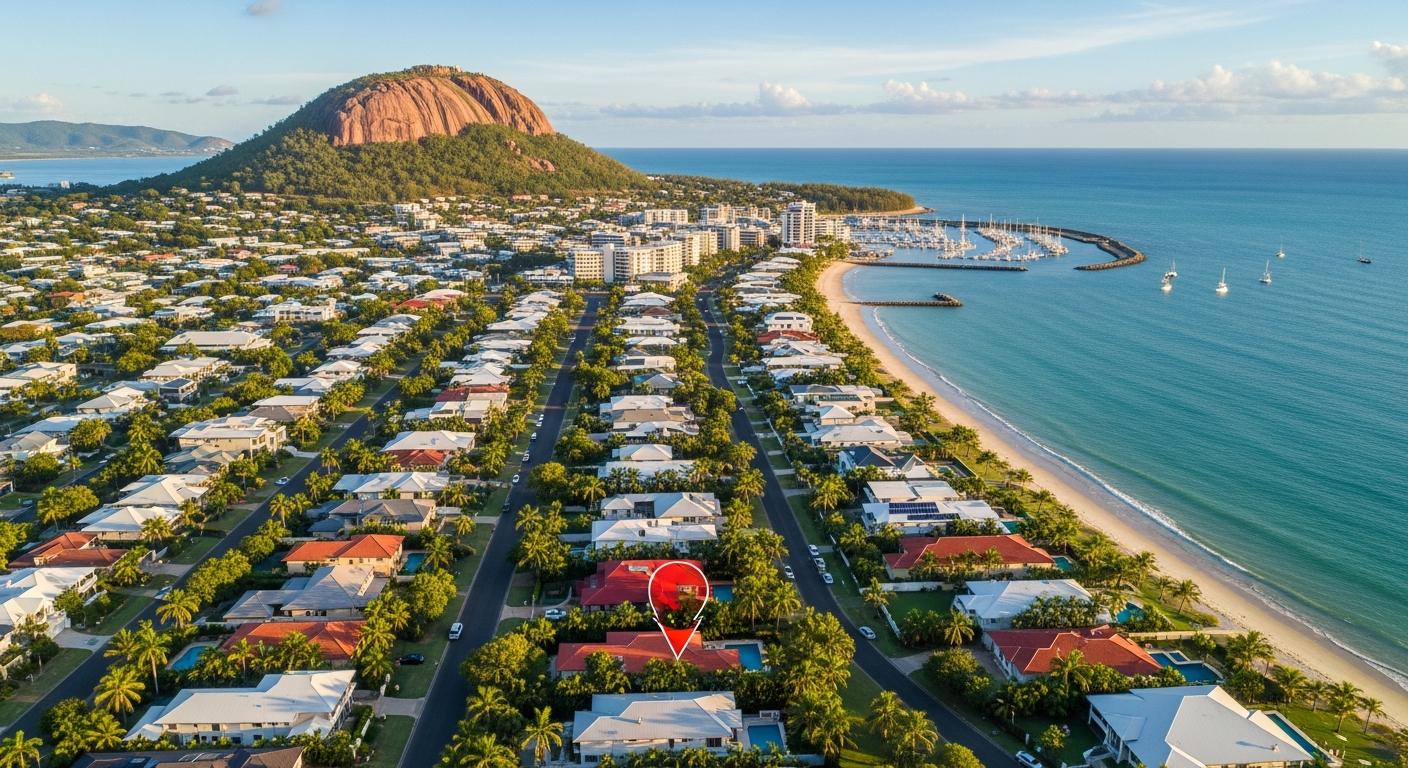
Kirwan QLD: Why This Townsville Suburb Scores 96/100 for Property Investment in 2026
If you're scanning Australia's property landscape for value and upside in 2026, there's a suburb just south of Townsville that's generating serious attention—and it's not the usual suspects.
Key Takeaways
- Kirwan scores 96/100 on Picki's investment timing index — a "Buying Window" signal
- Median house price $459K with 4.5% yield (streets up to 6.7%) and just 1% vacancy
- $2.5B+ infrastructure pipeline including port expansion, defence spending, and JCU campus
- Owner-occupier rates range 37–80% by street — target 60%+ streets for stability, lower for cashflow
- Regional market — plan for 5+ year hold and factor in cyclone insurance costs
Kirwan, QLD is scoring 96 out of 100 on Picki's investment timing index, signalling what we call a "Buying Window"—that rare alignment of strong fundamentals, tight rental conditions, and prices that haven't fully reflected underlying demand yet.
Here's the full breakdown of why Kirwan is worth a closer look, what's driving the opportunity, and what you should watch out for.
Overview: Kirwan by the Numbers
Kirwan is a well-established suburb in Townsville's southern corridor, roughly 10 kilometres from the CBD and home to approximately 21,418 residents within a broader Local Government Area (LGA) population of 192,768.
The headline data points tell a compelling story:
- Median house price: $459,000
- Rental yield: 4.5% (with some streets achieving 5.8% to 6.7%)
- Vacancy rate: ~1% (exceptionally tight)
- Demand rating: Very Good
- Suburb score: 96/100 for investment timing
For context, a 1% vacancy rate is landlord's market territory—it means tenants are competing for properties, not the other way around.
Why Kirwan Scores 96/100: What the Data Is Telling Us
Picki's suburb score isn't pulled from thin air. It's a composite measure that weighs multiple data points: rental demand, supply dynamics, market cycle position, price momentum, and local economic drivers.
Kirwan's 96/100 score reflects:
- Market cycle timing: The suburb is in a "Buying Window," meaning we're past the bottom but before the peak. This is the sweet spot where you're buying into momentum without overpaying.
- Rental market strength: A 1% vacancy rate is one of the tightest in regional Queensland. Combined with a 4.5% median yield (and streets hitting 6%+), the rental story is rock-solid.
- Affordability relative to fundamentals: At $459,000, Kirwan sits well below Brisbane's median ($800K+) and even significantly under nearby Townsville suburbs like Annandale ($767K). Yet it offers comparable or better yields and demand metrics.
- Economic resilience: Townsville's economy is anchored by defence, education, and port infrastructure—sectors that provide stability and long-term employment depth.
The score doesn't mean Kirwan is "perfect" or risk-free. What it does mean is that, based on current data, the timing for entry looks exceptionally favourable.
Infrastructure Drivers: Why Townsville (and Kirwan) Are on the Move
Regional property markets don't move in isolation. They respond to jobs, infrastructure, and economic activity. Townsville—and by extension, suburbs like Kirwan—are benefiting from a $2.5 billion+ infrastructure pipeline that includes:
- Port of Townsville expansion: A major trade gateway for North Queensland, handling minerals, livestock, and bulk commodities. Expansion projects are underway to increase capacity and attract more freight.
- Lavarack Barracks (Defence spending): One of Australia's largest Army bases, Lavarack is home to the 3rd Brigade and employs thousands. Defence spending in Townsville continues to grow, providing stable, high-wage employment.
- James Cook University campus: A major regional university with around 15,000 students (including offshore). JCU supports local housing demand and brings long-term economic stability through education and research activity.
- Townsville Ring Road and transport upgrades: Improving connectivity across the region, reducing commute times, and opening up development corridors.
These aren't speculative projects—they're funded, underway, or operationally expanding. Infrastructure of this scale creates jobs, attracts families, and sustains rental demand.
Rental Market Analysis: Tight, Tighter, Tightest
Let's dig into the rental side, because this is where Kirwan really shines.
A 1% vacancy rate is extraordinary. For comparison:
- National average vacancy sits around 1.5–2%
- Anything under 1.5% is considered a tight market
- Under 1% is landlord's paradise
What does this mean in practice?
- Faster leasing times: Properties are renting within days, not weeks
- Stronger negotiating power: Landlords can be more selective and hold rents firm
- Lower risk of vacancy loss: Even in slower months, demand cushions risk
The 4.5% median yield is solid for a regional market, especially when you consider that some streets in Kirwan are delivering 5.8% to 6.7%. That's cashflow-positive territory even after costs, depending on your financing structure.
For investors prioritising income over pure capital growth vs cashflow, Kirwan's rental profile is about as good as it gets in 2026.
Other Suburbs in the Townsville LGA: How Kirwan Compares
Kirwan isn't the only suburb worth watching in Townsville. Here's how it stacks up against nearby options:
- Aitkenvale: Median $595K, 4.7% yield, 1% vacancy. More established, slightly higher entry price, but similar rental tightness.
- Annandale: Median $767K, 4.1% yield, 1.6% vacancy. Premium suburb closer to the city, lower yield, slightly softer rental market.
- Balgal Beach: Median $615K, 17.1% recent growth, 17 days supply. Coastal lifestyle play, but thinner rental pool and higher volatility.
Kirwan offers a sweet spot: lower entry price than Aitkenvale or Annandale, tighter vacancy than Annandale, and stronger rental fundamentals than Balgal Beach. It's not the flashiest suburb, but the numbers stack up.
Owner-Occupier Rates and Street-Level Nuance
One often-overlooked metric is the owner-occupier rate, which in Kirwan ranges from 37% to 80% depending on the street.
Why does this matter?
- Higher owner-occupier rates (60%+) tend to correlate with better-maintained streetscapes, lower tenant turnover, and more stable demand.
- Lower owner-occupier rates (sub-40%) can indicate investor-heavy pockets, which may see more volatility in downturns.
Kirwan's range suggests a mix: some streets are owner-dominated (family-friendly, stable), others are more investor-focused (higher rental yield, potentially more tenant churn). This diversity means there's opportunity to target the profile that suits your strategy.
If you're after long-term capital growth, look for streets with 60%+ owner-occupiers. If cashflow is king, the investor-heavy streets with 5.8–6.7% yields are your target.
What to Watch Out For: Risks and Considerations
No suburb is a sure thing. Here's what you need to keep an eye on:
- Economic concentration risk: Townsville's economy leans heavily on defence, education, and resources. If any of these sectors contract (e.g., a shift in defence priorities or a mining downturn), it could impact employment and rental demand.
- Cyclone exposure: North Queensland is cyclone-prone. Insurance premiums can be higher, and building standards matter. Factor this into your due diligence and cashflow projections.
- Supply pipeline: Check local council data for new developments and land releases. A sudden influx of new housing could soften rents or slow price growth.
- Street-level variation: Not all of Kirwan is equal. Drive the streets, check crime stats, proximity to schools, parks, and transport. The difference between a 4.5% yield and a 6.7% yield often comes down to the specific pocket you buy in.
- Exit liquidity: Townsville is a regional market. Selling can take longer than in capital cities. Plan for a medium to long-term hold (5+ years) to ride out market cycles.
How to Research Further: Tools and Next Steps
If Kirwan has piqued your interest, here's how to do your homework:
- Use Picki's suburb data: Head to Kirwan's Picki profile for real-time vacancy rates, yield estimates, price trends, and street-level breakdowns. You can filter by property type, compare streets, and track how metrics are trending over time.
- Check recent sales: Look at realestate.com.au, Domain, and local agents for recent transactions. What's actually selling? What's sitting on the market?
- Talk to local property managers: They'll give you the ground truth on tenant demand, rent expectations, and problem streets to avoid.
- Walk the suburb: Google Street View is helpful, but there's no substitute for driving (or walking) the area. Check amenities, street appeal, and proximity to schools and shops.
- Run the numbers: Model your cashflow assumptions (rent, rates, insurance, management, maintenance) and stress-test them. What happens if vacancy creeps up to 2%? What if interest rates rise another 0.5%?
Picki's data is a starting point—use it to shortlist, then validate on the ground.
Frequently Asked Questions
Q: Why does Kirwan score 96/100 on Picki?
A: The score reflects multiple aligned factors: tight rental conditions (1% vacancy), strong yields (4.5–6.7%), affordable entry ($459K median), positive market cycle timing, and robust economic drivers including defence, education, and port infrastructure.
Q: Is Kirwan a good suburb for first-time investors?
A: Kirwan offers several advantages for first-time investors: affordable entry price well below capital city medians, strong rental demand, and cashflow-positive potential. However, it's a regional market with lower liquidity than capital cities, so plan for a medium to long-term hold (5+ years).
Q: What are the risks of investing in Kirwan?
A: Key risks include economic concentration (Townsville relies on defence, education, and resources), cyclone exposure (higher insurance premiums), potential supply pipeline additions, and lower exit liquidity compared to capital city markets.
Q: What rental yield can I expect in Kirwan in 2026?
A: The suburb median yield is 4.5%, but street-level variation is significant — some streets achieve 5.8–6.7% gross yield. Target specific streets based on whether you prioritise cashflow (investor-heavy streets) or stability (owner-occupier dominant streets).
Final Thoughts: A Rare Buying Window
Kirwan isn't a hype play. It's not going to double overnight, and it's not a lifestyle or prestige pick. But for investors focused on fundamentals—tight vacancy, solid yields, affordable entry, and infrastructure tailwinds—it's one of the most compelling regional opportunities on the board in 2026.
The 96/100 score reflects what the data is saying: this is a suburb in a Buying Window, where timing, demand, and value are aligned.
If you're building a portfolio for cashflow, diversification, or medium-term growth, Kirwan deserves a spot on your shortlist.
Do your homework. Crunch the numbers. And if it stacks up for your strategy, act while the window is still open.