


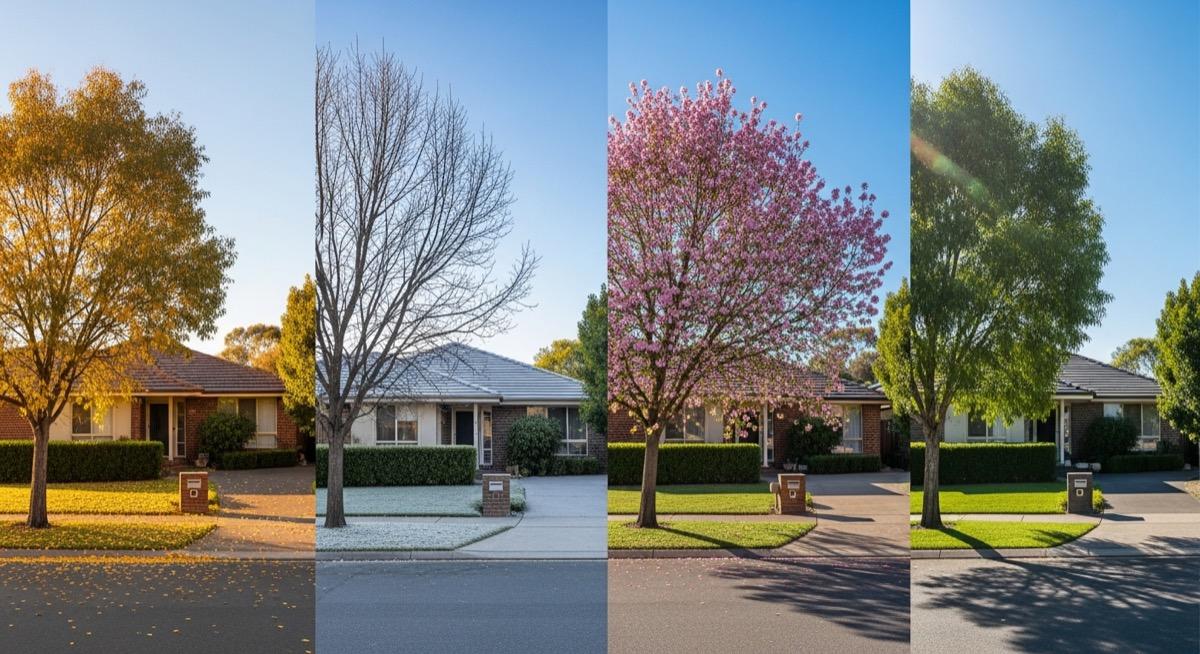
How Seasonal Patterns Affect Property Market Data: Why Timing Matters When Analysing Suburbs
If you've ever looked at suburb data in January and then checked again in April, you might have noticed the numbers tell a slightly different story. Vacancy rates shift, listing volumes change, median prices wobble, and days on market stretch or compress â sometimes dramatically â depending on when you look. This isn't noise. It's seasonality, and understanding it is one of the most overlooked skills in property investment research.
Key Takeaways
- Australian property markets follow predictable seasonal patterns that affect almost every data metric investors rely on
- Listing volumes typically peak in spring (SeptemberâNovember) and drop significantly over the DecemberâJanuary holiday period
- Vacancy rates, days on market, and vendor discounting all shift seasonally â comparing months without adjusting for this can lead to false conclusions
- Picki data shows suburb-level metrics at point-in-time snapshots, so understanding seasonal context helps you interpret what the numbers actually mean
- The best approach is to compare year-on-year data for the same period rather than month-to-month changes
Why Seasonality Matters More Than Most Investors Realise
Property markets are not static. They breathe with the calendar. Every year, the Australian property market follows a broadly predictable rhythm influenced by school terms, public holidays, weather patterns, financial year deadlines, and cultural habits around moving and buying.
For investors using data to make decisions â whether through Point Cook's suburb dashboard or any other market analysis tool â understanding this rhythm is critical. Without seasonal context, you might mistake a normal summer slowdown for a market correction, or interpret a spring surge as a breakout trend when it's simply the market doing what it always does at that time of year.
According to Picki's analysis of listing and transaction data across Australian suburbs, the seasonal effect on key metrics can be substantial â enough to change your interpretation of whether a suburb is strengthening, weakening, or holding steady.
The Australian Property Calendar: Four Distinct Phases
Summer Slowdown (DecemberâJanuary)
The holiday period is the quietest time in Australian property. Listing volumes drop by 30â50% compared to spring peaks. Fewer properties come to market, fewer auctions are scheduled, and many agents take extended breaks. This means:
- Median price data becomes less reliable due to smaller sample sizes
- Days on market typically inflate because properties listed in late November or early December sit through the holiday dead zone
- Vacancy rates can temporarily spike as lease changeovers coincide with the academic year cycle, particularly in suburbs near universities
- Auction clearance rates often look artificially strong because only motivated sellers and confident agents list during this period
If you're analysing a suburb's data in January, you're looking at a market operating at reduced capacity. The metrics are real, but they represent a compressed, unrepresentative sample.
Autumn Ramp-Up (FebruaryâMay)
The market returns to full swing in February as schools restart and buyers who spent summer researching begin actively purchasing. Listing volumes climb steadily through March and April before a brief pause around Easter and Anzac Day.
This is the period where year-on-year comparisons start becoming meaningful again. By March, enough transactions have occurred to generate statistically useful data. For suburbs like Blacktown where transaction volumes are high, the autumn data is often the first reliable read on market direction for the year.
Key autumn patterns include:
- Vendor discounting tends to be lower in FebruaryâMarch as fresh stock meets pent-up buyer demand
- Days on market compress as competition among buyers intensifies
- New listing volumes provide the first genuine supply signal for the year
Winter Contraction (JuneâAugust)
Winter brings a second quieter period, though not as dramatic as the summer slowdown. Listing volumes typically drop 15â25% from autumn peaks. The end of financial year in June creates its own dynamics â some investors rush to settle before 30 June for tax depreciation purposes, while others deliberately delay until the new financial year.
Winter data has its own quirks:
- Rental markets often tighten as fewer tenants move during cold months, which can temporarily suppress vacancy rate figures
- Price growth figures may appear to stall simply because fewer high-value properties transact in winter
- Auction volumes decrease but clearance rates can remain stable because sellers who list in winter tend to have realistic price expectations
Spring Surge (SeptemberâNovember)
Spring is the main event. Listing volumes peak, buyer activity surges, and the largest number of transactions occur during this three-month window. For data analysis, spring provides the most statistically robust sample of the year.
However, the spring surge creates its own interpretation challenges:
- Median prices can shift based on the mix of properties listed â if more premium stock enters the market in spring (which it typically does), the median may rise without underlying price growth
- Days on market can move in either direction â higher volumes mean more choice for buyers (potentially lengthening DOM) but also more buyer activity (potentially shortening it)
- Vacancy rates in suburbs like Tarneit may decrease as the peak rental season coincides with population movement patterns
How Seasonal Patterns Affect Specific Metrics
Vacancy Rates: The Metric Most Affected by Seasonality
Vacancy rates are perhaps the most seasonally volatile metric investors track. A suburb that shows 1.8% vacancy in February might show 2.4% in July â not because the rental market weakened, but because seasonal tenant turnover patterns are at work.
University towns and suburbs with high proportions of student housing experience the most dramatic seasonal vacancy swings. But even in established family-oriented suburbs, the pattern holds: fewer leases commence in winter, creating brief vacancy pockets that resolve by spring.
When reviewing vacancy rate data on Picki's suburb dashboards, the most reliable approach is comparing the current figure to the same period in previous years. A vacancy rate of 2.0% in April means something very different from 2.0% in December.
Vendor Discounting: Seasonal Leverage Shifts
The gap between listed price and sale price â vendor discounting â follows a seasonal pattern that directly reflects buyer-seller power dynamics.
In spring, when more buyers are active and emotionally engaged, vendor discounting tends to narrow. Some suburbs even see properties consistently selling above listed prices during peak spring weekends. In winter, the opposite occurs: fewer buyers means more negotiating leverage, and discounting tends to widen.
For investors, this has practical implications. If you're analysing vendor discounting data in June and comparing it to October, the seasonal component could account for 2â3 percentage points of difference. That's not a market shift â it's the calendar.
Days on Market: Context Is Everything
A property that takes 45 days to sell in January is having a very different experience from one that takes 45 days in October. In January, 45 days might mean the property sat through two weeks of holiday inactivity â effectively, it was genuinely on the market for only 30 days. In October, 45 days of active marketing with open inspections every week is a much stronger signal of buyer hesitation.
Picki data shows days on market figures as reported, so applying seasonal context manually is important. The suburbs page for areas like Mandurah will show you the current DOM reading, but interpreting whether that's strong or weak requires knowing what's typical for that time of year in that market.
Listing Volumes: The Leading Indicator
New listing volumes are one of the strongest leading indicators for price direction, but only when you strip out the seasonal component. A 20% drop in listings from October to January means almost nothing â that's just the market going on holiday. A 20% drop from October 2025 to October 2026 in the same suburb? That's a genuine supply signal worth investigating.
The same logic applies to absorption rates and supply-demand calculations. If you're comparing how quickly properties are being absorbed, the comparison must be seasonal to be meaningful.
How to Adjust Your Analysis for Seasonality
1. Always Compare Like-for-Like Periods
The single most important rule: compare April 2026 to April 2025, not April 2026 to March 2026. Year-on-year comparisons automatically remove most seasonal distortion and reveal genuine trend changes.
2. Use Rolling Averages Where Possible
A 12-month rolling median smooths out seasonal bumps entirely. If a suburb's 12-month rolling median is climbing while the monthly figure dips, the dip is likely seasonal, not structural. Picki's suburb comparison tools can help you track these trends over time.
3. Know Your Suburb's Specific Seasonal Profile
Not all suburbs follow the national pattern equally. Coastal holiday towns like those in the Mandurah LGA may see peak activity in summer rather than spring, as holiday visitors become buyers. Mining-influenced towns follow resource industry cycles more than calendar seasons. Student-heavy suburbs pulse with the academic year.
4. Weight Spring and Autumn Data More Heavily
When making investment decisions, give more analytical weight to data from MarchâMay and SeptemberâNovember. These are the periods with the highest transaction volumes and most representative sample sizes. Summer and winter data should inform your analysis but not anchor it.
5. Watch for Seasonal Anomalies â They're the Real Signals
Once you understand what's normal for each season, deviations become powerful signals. If a suburb that typically sees strong spring listing volumes has a flat or declining spring season, that's telling you something genuine about vendor sentiment. If vacancy rates don't follow their normal winter contraction, that could indicate a structural shift in rental demand.
The anomalies â the moments when the market doesn't do what it seasonally should â are where the most valuable insights hide.
Practical Application: Interpreting Picki Data Through a Seasonal Lens
When you open a suburb page on Picki and see the current metrics, here's a quick mental framework:
- Check the date. What time of year is this data from? Is it peak season or off-season?
- Adjust expectations. If it's January data, expect higher vacancy, longer DOM, and lower volumes. If it's October data, expect the opposite.
- Look for year-on-year trends. Is this April's vacancy rate higher or lower than last April's? That comparison is more meaningful than whether it's higher or lower than last month.
- Cross-reference multiple metrics. If vacancy rates are up AND days on market is extending AND listing volumes are rising â in any season â that convergence is a genuine signal, not seasonal noise.
- Consider the investment timeline. If you're buying a property to hold for 10+ years, a single quarter's seasonal fluctuation is irrelevant to your thesis. But if you're timing a purchase to the month, seasonal patterns affect both the yield you'll achieve and the price you'll pay.
Why This Matters for Your Investment Decisions
The investors who consistently make better decisions aren't necessarily smarter â they're better at reading context. Seasonal awareness is a foundational layer of context that separates superficial data-checking from genuine market analysis.
Every suburb on Picki tells a story through its data. But like any story, you need to understand the setting to interpret the plot. A vacancy rate isn't just a number â it's a number in a month, in a season, in a market cycle. The more layers of context you bring to your analysis, the more accurate your conclusions will be.
Ready to start analysing suburbs with seasonal context in mind? Explore suburb data on Picki and start comparing year-on-year trends across the metrics that matter most to your investment strategy.
Frequently Asked Questions
What is the best time of year to buy an investment property in Australia?
There is no single best time, but winter (JuneâAugust) typically offers investors more negotiating leverage due to lower buyer competition. Vendor discounting tends to be wider and days on market longer, which can result in better purchase prices. However, the trade-off is reduced choice â fewer properties are listed in winter compared to spring. The best approach is to be research-ready year-round and act when the right property appears at the right price, regardless of season.
How much do seasonal patterns affect property data in Australia?
Seasonal effects can be substantial. Listing volumes typically vary by 30â50% between peak (spring) and trough (summer holiday) periods. Vacancy rates can swing by 0.5â1.0 percentage points seasonally in some suburbs. Days on market may inflate by 10â15 days during holiday periods. These variations are large enough to change your interpretation of whether a market is strengthening or weakening if you don't account for them.
Should I avoid looking at property data during off-peak months?
No â off-peak data is still valuable, but it requires seasonal adjustment. The key is to compare like-for-like periods (e.g., this January versus last January) rather than sequential months. Off-peak periods can also reveal genuine signals: a suburb that maintains strong metrics through winter is demonstrating resilient demand that's worth noting.
Do seasonal patterns affect all Australian property markets equally?
No. Capital city markets tend to follow the national pattern most closely, while regional markets can diverge significantly. Coastal holiday towns may peak in summer. Mining towns follow resource industry cycles. University suburbs pulse with academic terms. Understanding your specific suburb's seasonal profile â which you can build by tracking metrics across multiple periods on Picki â is more useful than applying national generalisations.
How does seasonality affect rental yield calculations?
Seasonality affects both sides of the rental yield equation. Purchase prices may be lower in winter (improving yield), while rental income estimates based on winter vacancy data might understate annual performance. For the most accurate yield calculations, use 12-month rolling rental income figures and consider the purchase price in the context of when in the cycle you're buying. Picki's suburb dashboards display yield metrics that reflect current market conditions, so checking these across multiple periods gives you a more complete picture.