

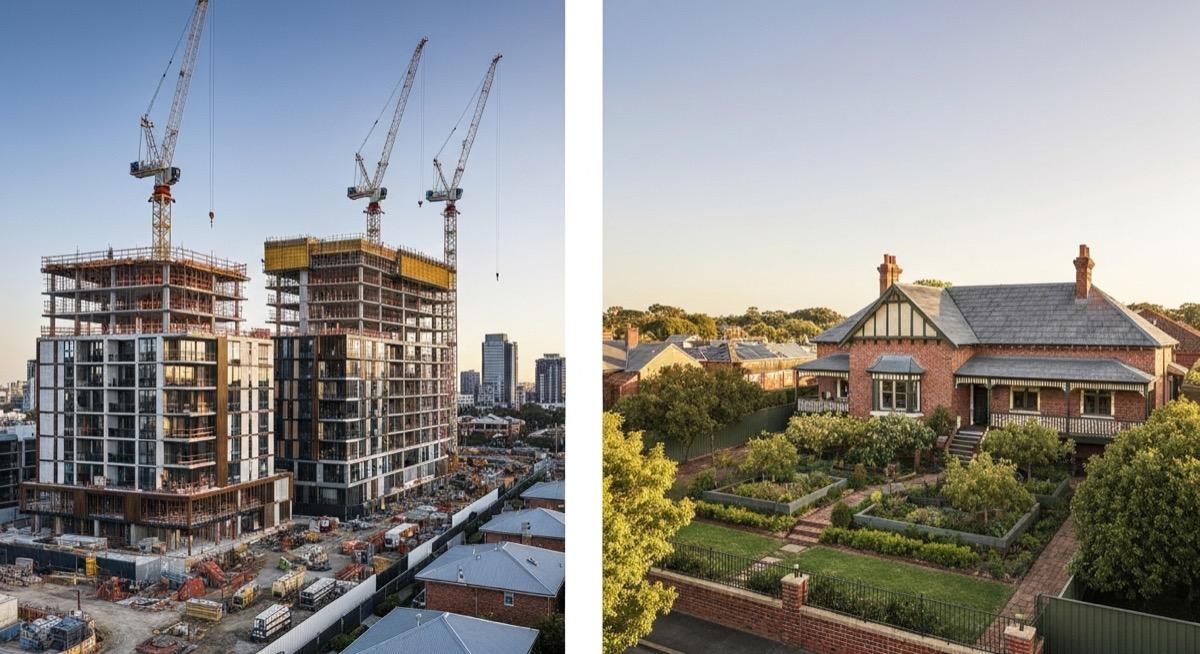
Off-the-Plan vs Established Property Investment in Australia: Which Delivers Better Returns in 2026?
Should you buy a brand-new apartment off the plan, or search for an established property with existing tenants and a track record? It's one of the most common questions Australian property investors face — and one where the conventional wisdom often gets it wrong.
The truth is neither option is universally better. Off-the-plan and established properties serve different investment strategies, carry different risk profiles, and perform differently depending on market conditions. In April 2026, with construction costs still elevated, interest rates stabilising, and rental markets tight across most Australian capitals, the calculus has shifted in ways that matter for your next investment decision.
Understanding Off-the-Plan Property Investment
Off-the-plan means purchasing a property before it's built — typically an apartment or townhouse in a new development. You sign a contract based on architectural plans, floor plans, and artist impressions, then settle when construction is complete, usually 18–36 months later.
In Australia, off-the-plan purchases accounted for approximately 23% of all investor transactions in 2025, down from a peak of 31% in 2017 but still representing a significant share of investment activity.
The Financial Mechanics
The deposit structure is the initial attraction. Most off-the-plan purchases require a 10% deposit at exchange, with the balance due at settlement. This means your capital is tied up for a fraction of the total purchase price during the construction period — a form of leverage that established purchases don't offer.
However, you're not earning rental income during construction, and you may be paying interest on bridging finance or foregoing returns on your deposit capital. The true cost of capital over a 24-month construction period can range from $15,000 to $45,000 depending on your opportunity cost and financing arrangements.
Stamp Duty Concessions
Several Australian states offer stamp duty concessions or exemptions for off-the-plan purchases. In Victoria, buyers can claim a stamp duty reduction based on the value of construction yet to be completed at the contract date. In NSW, first home buyers purchasing off-the-plan properties under $800,000 pay no stamp duty at all. Queensland and Western Australia also offer concessions, though the specifics vary by value threshold and buyer status.
These concessions can represent savings of $8,000–$35,000 depending on the state and property value. When comparing the total acquisition cost of off-the-plan versus established, stamp duty savings are a meaningful factor — but they shouldn't be the deciding one.
Depreciation Advantages
New properties attract maximum depreciation deductions under Division 40 (plant and equipment) and Division 43 (building allowance). A $600,000 off-the-plan apartment might generate $12,000–$18,000 in depreciation deductions in year one, compared to $3,000–$6,000 for a comparable established property built before 2017.
For investors in the 37% or 45% marginal tax bracket, those additional deductions translate to $3,300–$5,400 in annual tax savings. This can be the difference between a property that's slightly negatively geared and one that's cashflow-neutral after tax.
Understanding Established Property Investment
Established properties are existing buildings with a sales history, rental track record, and — crucially — a known product. You can inspect the actual property, talk to existing tenants, review body corporate records, and assess the building's condition before committing.
The Data Advantage
Established properties generate data that off-the-plan purchases simply don't have. You can analyse comparable sales over multiple years, track rental income history, assess maintenance costs from body corporate reports, and evaluate the property's position within its suburb's price distribution.
Picki data shows that suburbs with a higher proportion of established housing stock — typically those with less than 10% of dwellings built in the last five years — tend to show more predictable price behaviour. This doesn't mean they grow faster, but the growth is more consistent and less prone to supply-shock volatility.
Land Content and Long-Term Growth
The fundamental driver of property value appreciation is land, not the building sitting on it. Established houses, particularly in inner and middle-ring suburbs, typically have higher land-to-asset ratios than new-build apartments. A $650,000 established house in Blacktown NSW might sit on $420,000 worth of land. A $650,000 off-the-plan apartment in the same area might have a land component of just $120,000.
Over 10–20 years, that land content difference compounds dramatically. The house's land value might grow at 4–6% annually while the apartment's land share delivers a much smaller contribution to overall capital growth.
Renovation and Value-Add Potential
Established properties offer something new builds can't: the ability to add value through renovation. A cosmetic renovation costing $30,000–$50,000 can add $80,000–$120,000 in value to a well-located established property. Strategic renovations can also increase rental income by 15–25%, improving both yield and equity simultaneously.
This option is largely unavailable with off-the-plan purchases, where the product is delivered to a fixed specification.
Head-to-Head: Where the Data Points in 2026
Capital Growth Performance
CoreLogic data covering the decade from 2016 to 2025 shows established houses in Australian capital cities delivered median annual capital growth of 5.8%, compared to 3.4% for new apartments purchased off the plan. Even when comparing like-for-like (units only), established units outperformed new-build units by approximately 1.2% per annum.
The growth gap is most pronounced in oversupplied markets. In areas like Point Cook VIC and parts of inner Brisbane, where significant new apartment stock was delivered between 2018 and 2023, established properties in the same postcodes outperformed new builds by 2.5–3.5% annually over five years.
Rental Yield Comparison
New properties often advertise higher gross yields — and this can be accurate at completion. But gross yield doesn't tell the full story. Off-the-plan properties frequently launch at prices 10–20% above comparable established stock, meaning the initial yield, while advertised as attractive, is calculated from an inflated base price.
Within three to five years, as the property ages and newer competing stock enters the market, rents for former off-the-plan properties tend to converge with the established market. The premium rent that initially looked attractive narrows, and the yield settles at or below the suburb average.
Established properties in tight rental markets like Kirwan QLD, where vacancy rates sit below 1.5%, tend to deliver more stable and predictable rental income over the full investment period.
Risk Profile
Off-the-plan purchases carry risks that established properties don't:
Established properties have their own risks — older buildings may have structural issues, asbestos, or outdated wiring — but these are identifiable through pre-purchase inspections. The risk with off-the-plan is fundamentally about unknowns.
When Off-the-Plan Makes Sense
Despite the data favouring established properties on most metrics, there are specific scenarios where off-the-plan is the smarter choice:
High-income investors prioritising tax deductions. If you're in the 45% tax bracket and your strategy leans toward negative gearing for tax efficiency, the depreciation advantages of a new property are substantial. The first five years of depreciation on a new build can generate $40,000–$70,000 in cumulative tax deductions.
First-time investors in stamp-duty-concession states. If you qualify for first home buyer concessions on off-the-plan purchases, the stamp duty saving can represent 3–5% of the purchase price — a material head start on your investment.
Markets with genuine undersupply of new stock. In areas like Mandurah WA, where established stock is ageing and new supply is limited, well-located new builds can command premium rents and attract quality tenants.
House-and-land packages in growth corridors. New houses (not apartments) in master-planned communities often capture both the land-value growth and the new-build depreciation benefits. This is the one segment where off-the-plan can match or exceed established property returns — provided the location fundamentals are strong.
When Established Properties Win
Most of the time, for most investors. Established properties in suburbs with strong fundamentals — low vacancy, rising population, diverse employment, solid infrastructure — tend to deliver superior risk-adjusted returns over a 10-year holding period.
The advantages compound over time. Higher land content drives stronger capital growth. Known maintenance costs improve budgeting accuracy. Existing body corporate history reveals potential issues. And the ability to add value through renovation provides an active lever that off-the-plan simply doesn't offer.
According to Picki's analysis, suburbs with predominantly established housing stock (over 80% of dwellings built before 2015) and owner-occupier ratios above 65% have historically delivered the most consistent capital growth with the lowest volatility — the kind of boring, reliable returns that build genuine wealth.
The 2026 Landscape: What's Changed
Several factors in the current market are shifting the off-the-plan vs established equation:
Construction costs remain elevated. Building material costs have risen approximately 35% since 2020 and show no signs of returning to pre-pandemic levels. This means off-the-plan purchase prices reflect genuinely higher construction costs, not just developer margin inflation. It also means fewer new projects are being launched, which could tighten supply in some markets over the next 2–3 years.
Interest rates have stabilised. With the RBA holding rates steady through early 2026, the settlement risk for off-the-plan purchases has reduced compared to 2023–2024, when rapid rate rises caught many buyers with valuation shortfalls. However, rates remain higher than the ultra-low levels at which many current off-the-plan contracts were signed.
Rental markets are tight nationally. The national vacancy rate sits at 1.3% as of March 2026, meaning both new and established rental properties are experiencing strong tenant demand. This temporarily narrows the rental yield gap between new and established stock — but tight markets don't last forever.
Making Your Decision: A Practical Checklist
Before committing to either path, run through these questions:
The best investment isn't about following a rule — it's about matching the right property type to your specific financial situation, risk tolerance, and investment timeline. Use data to compare options within your target suburbs, run the cashflow numbers for your specific tax position, and make the decision that serves your 10-year wealth plan.
Frequently Asked Questions
Are off-the-plan properties a bad investment in 2026?
Not inherently. Off-the-plan properties are a poor investment when bought at inflated prices in oversupplied markets without understanding settlement risk. They can be a strong investment when purchased in undersupplied growth corridors, particularly as house-and-land packages, by high-income investors who can maximise depreciation benefits. The key is matching the investment type to your specific circumstances and ensuring the purchase price reflects genuine market value, not developer marketing premiums.
How much more do off-the-plan apartments cost compared to equivalent established units?
Across Australian capital cities in 2025–2026, off-the-plan apartments were priced 10–22% above comparable established units in the same suburb. This premium reflects newness, developer margin, and stamp duty concession pricing. Within 3–5 years of settlement, resale values typically converge with the established market, meaning the premium is effectively a capital loss unless offset by depreciation benefits and stamp duty savings.
What percentage of off-the-plan developments face settlement issues?
Based on 2025 data, approximately 12–18% of off-the-plan apartment contracts in Melbourne and Brisbane experienced valuation shortfalls at settlement, meaning the bank valued the completed property below the contract price. The shortfall averaged $35,000–$55,000. In Sydney and Perth, the rate was lower at 6–10%, reflecting tighter supply conditions in those markets.
Can I get a better deal buying established property in a buyer's market?
Yes. Established properties offer negotiation flexibility that off-the-plan contracts typically don't. In a buyer's market, vendor discounts on established properties can range from 5–12% below the original listing price. Off-the-plan prices are usually fixed at contract exchange with limited room for negotiation, particularly in popular developments. Picki data shows that suburbs with higher days on market tend to offer greater negotiation opportunities for buyers.
Should first-time investors choose off-the-plan or established?
For most first-time investors, established properties in suburbs with strong fundamentals — low vacancy rates, diverse employment, good transport links — represent the lower-risk entry point. The data track record, inspection certainty, and immediate rental income provide a more predictable foundation for building investment confidence. Off-the-plan can work for first-time investors in states offering substantial stamp duty concessions, but only with careful due diligence on the developer, the market, and the settlement timeline.