


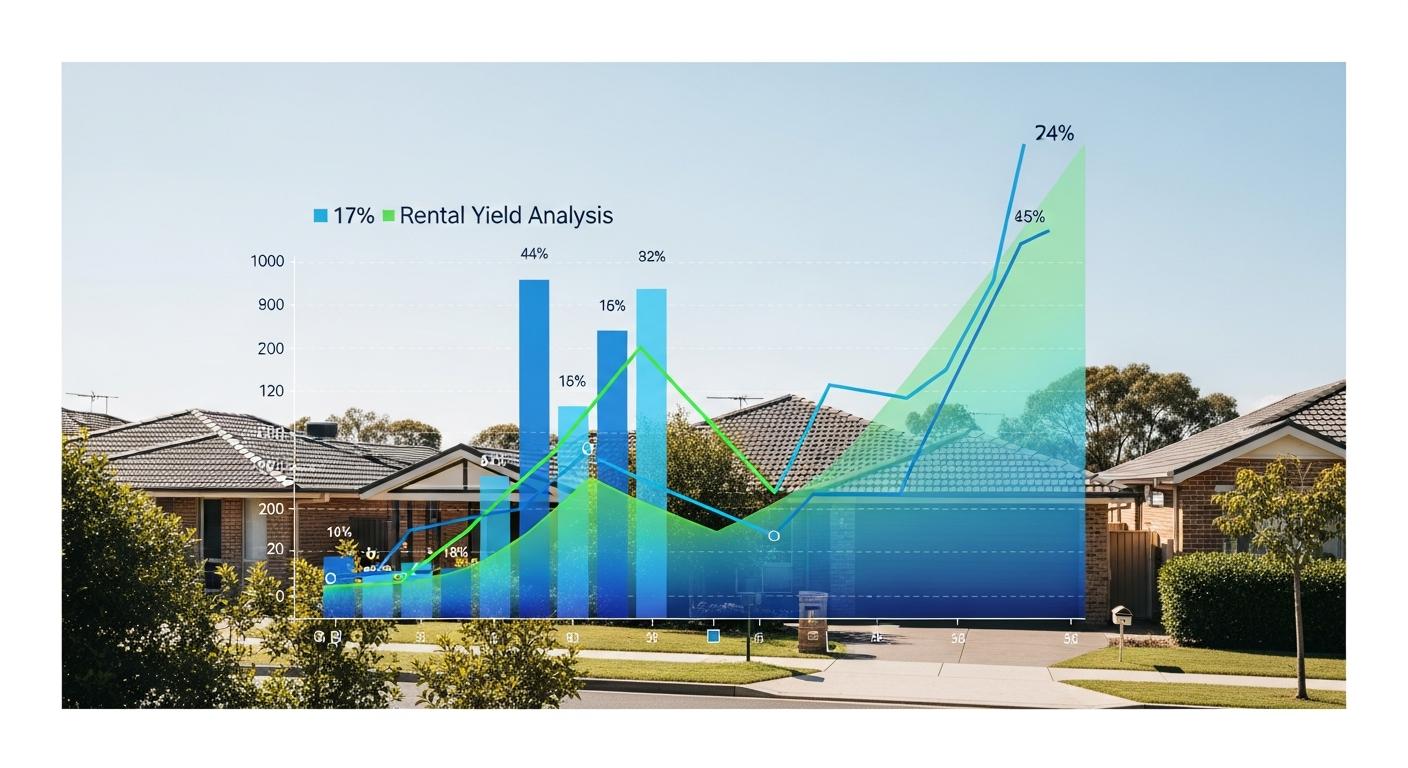
How Picki's Yield Score Works: What Rental Return Metrics Mean and How to Use Them
If you've spent any time on Picki, you've probably noticed the Yield Score — a metric that appears on every suburb and property page. But what exactly goes into it? What does a high score mean versus a low one? And how should you use it alongside Picki's other metrics when evaluating a potential investment?
This post breaks down how the Yield Score works, what data feeds into it, and — most importantly — how to interpret it without falling into the common traps that catch even experienced investors.
Key Takeaways
- Picki's Yield Score measures the rental return profile of a suburb relative to other areas across Australia, incorporating gross yield, rental demand strength, and yield stability over time.
- A high Yield Score doesn't automatically mean "buy" — it needs to be interpreted alongside growth potential, vacancy rates, and your personal investment strategy.
- Yield Scores tend to be higher in regional areas and lower in premium metro suburbs, but this reflects different investment profiles rather than better or worse opportunities.
- The score accounts for yield consistency, not just the current snapshot — suburbs with volatile rental returns score differently from those with steady, predictable income.
- Understanding how yield interacts with capital growth is essential: Picki data shows that the highest-yielding suburbs rarely deliver the strongest capital growth, and vice versa.
What the Yield Score Measures
At its core, the Yield Score quantifies how attractive a suburb's rental return profile is compared to the national benchmark. It draws on several underlying data points:
- Gross rental yield: The annual rental income as a percentage of the property's value. This is the most intuitive component — gross yield tells you the raw return before expenses are factored in.
- Yield trend: Whether yields in the suburb are rising, stable, or compressing. A suburb with a 5.5% yield that's been climbing for three years scores differently from one with 5.5% that's been declining.
- Rental demand indicators: Vacancy rates, days on market for rentals, and the ratio of rental listings to total stock. These metrics indicate whether the yield is sustainable — a high yield means little if properties sit vacant for weeks between tenants.
- Rent-to-income ratio: How affordable rents are relative to local household incomes. Suburbs where rents consume a large share of tenant income face a ceiling on future rental growth, which affects yield sustainability.
Each component is weighted and normalised against the national dataset, producing a score that allows direct comparison across suburbs regardless of state, price point, or dwelling type.
How to Read Your Yield Score
Picki scores suburbs on a scale, with higher scores indicating stronger rental return profiles relative to the national average. Here's how to interpret different ranges:
High Yield Scores
Suburbs with high Yield Scores typically share several characteristics: gross yields well above the metro average, low vacancy rates, and stable or rising rents. You'll often find these in regional centres with strong employment bases, affordable housing stock, and limited new supply.
For example, suburbs like Kirwan in Townsville have historically delivered strong rental returns, combining affordable purchase prices with solid tenant demand driven by the region's healthcare, defence, and education sectors. As we explored in our detailed analysis of Kirwan, this combination of factors creates a compelling yield profile.
However, high Yield Scores often correlate with lower capital growth potential. This isn't a flaw in the scoring — it reflects the well-documented tension between capital growth and cashflow in Australian property markets.
Moderate Yield Scores
Middle-range Yield Scores typically represent suburbs where yields are close to or slightly above the metro average. These areas often offer a balanced profile — reasonable rental returns alongside moderate capital growth potential. Many outer-metro suburbs in cities like Melbourne, Brisbane, and Perth fall into this range.
For investors pursuing a balanced strategy, moderate Yield Scores can be the sweet spot. The rental income contributes meaningfully to holding costs while the property also participates in broader market growth.
Lower Yield Scores
Suburbs with lower Yield Scores tend to be in premium locations where property values are high relative to rents. Think inner-city Sydney, Melbourne's eastern suburbs, or established coastal areas. Yields of 2–3% are common in these markets.
A low Yield Score doesn't mean "avoid" — these suburbs often deliver strong capital growth over long holding periods. The score is simply reflecting that the rental return component of total returns is relatively modest. If your strategy is growth-focused and you can sustain the holding costs, a low Yield Score suburb may be exactly right for your portfolio.
The Relationship Between Yield Score and Other Picki Metrics
The Yield Score is one piece of a larger puzzle. Understanding how it interacts with Picki's other scores gives you a much richer picture.
Yield Score + Growth Score
These two metrics often move in opposite directions — the classic yield vs growth trade-off. Suburbs scoring highly on both are rare and worth investigating closely. When you find one, it usually indicates a market in transition: rental demand has already recognised the suburb's value, and capital values are beginning to follow. As outlined in our explanation of how Picki's Growth Score works, growth metrics incorporate price momentum, demand drivers, and supply constraints — all of which interact with yield dynamics.
Yield Score + Population Score
Strong population growth combined with a high Yield Score can signal a suburb where rental demand is being driven by genuine demographic expansion rather than just affordability. This is a more sustainable foundation for rental returns compared to suburbs where high yields exist primarily because property values have stagnated.
Yield Score + Configuration Score
The Configuration Score tells you whether the dominant property types in a suburb match local demand patterns. A high Yield Score in a suburb with a strong Configuration Score suggests that the rental returns are being generated by properties that are well-suited to the local market — a positive sign for long-term sustainability.
Common Misinterpretations of Yield Data
Even experienced investors can misread yield signals. Here are the most common traps:
Trap 1: Chasing the Highest Yield
A suburb advertising an 8% gross yield looks compelling on paper. But extremely high yields often exist for a reason — they can indicate declining property values (the denominator in the yield equation is falling), high tenant turnover, or structural issues in the local economy. Always look at why the yield is elevated before assuming it represents a good investment.
Trap 2: Ignoring Vacancy in Yield Calculations
Gross yield assumes 52 weeks of rental income per year. In reality, vacancy periods, tenant changeover, and maintenance windows reduce your effective yield. A suburb with a 6% gross yield but a 4% vacancy rate delivers a very different outcome from one with 5.5% gross yield and 1% vacancy. Picki's Yield Score accounts for vacancy and rental demand, which is why it can tell a different story from raw yield figures.
Trap 3: Comparing Yields Across Different Property Types
Units in a suburb typically yield higher than houses, because unit values are lower relative to achievable rents. Comparing a unit's 5.5% yield to a house's 3.8% yield in the same suburb doesn't mean units are better investments — it means the yield calculation reflects different price-to-rent ratios. Factor in capital growth potential, maintenance costs, and strata fees for a complete comparison.
Trap 4: Assuming Yield Stability
A suburb yielding 5% today might yield 4% next year if property values rise faster than rents (yield compression) or 6% if values fall while rents hold (yield expansion). The direction of yield movement matters as much as the current level. Picki's approach of incorporating yield trends into the score helps address this — but it's still worth understanding the underlying dynamics.
Yield in the Context of Your Strategy
How much weight you give the Yield Score depends entirely on your investment strategy and financial position.
Cash Flow-Focused Investors
If you need the property to generate positive cash flow (or close to it) from day one, the Yield Score is one of your most important filters. Prioritise suburbs with high and stable Yield Scores, then cross-reference with vacancy rates and cashflow calculations to confirm the numbers work in practice.
Growth-Focused Investors
If you're optimising for capital appreciation and can sustain negative cash flow, a lower Yield Score is acceptable — even expected. Focus more on Growth Score, Population Score, and infrastructure catalysts, treating yield as a secondary consideration that helps manage holding costs.
Balanced Investors
The most common approach. Look for suburbs where the Yield Score is above the metro median — not necessarily the highest — while other growth indicators are also positive. This middle path sacrifices some yield for growth potential (or vice versa) but builds a more resilient portfolio over time.
Working With Yield Data in Practice
Here's a practical workflow for using Picki's Yield Score effectively:
- Start with your strategy. Know whether you're prioritising yield, growth, or balance before you start screening.
- Set a Yield Score threshold. Use it as an initial filter, not a final decision tool. For cashflow investors, set a higher minimum; for growth investors, don't filter too aggressively.
- Cross-reference with vacancy data. Any suburb that passes your yield filter should have vacancy rates below 3% — ideally below 2%. The tightest rental markets are where yield is most sustainable.
- Check yield direction. Is the Yield Score improving, stable, or declining? A declining score in a suburb you like isn't necessarily a red flag — it might indicate yield compression from rising property values, which means capital growth is underway.
- Model the actual cashflow. Use Picki's rental income estimates combined with your actual financing costs, management fees, and expected expenses to see whether the yield translates into workable cash flow for your specific situation.
- Compare across your shortlist. The Yield Score's greatest value is in comparison — use it to rank suburbs within your target area or price range, then investigate the top candidates in detail.
What the Yield Score Doesn't Tell You
No single metric captures everything. The Yield Score deliberately focuses on rental return dynamics, which means it doesn't directly account for:
- Tax implications: Depreciation benefits, negative gearing, and marginal tax rates all affect your after-tax return but aren't factored into the suburb-level score.
- Property condition: Two properties in the same suburb can have wildly different rental returns depending on condition, presentation, and property management quality.
- Future infrastructure: Planned developments that might boost (or dilute) rental demand in coming years aren't yet reflected in current yield data.
- Strata and body corporate costs: For units and townhouses, these costs significantly affect net yield but vary property by property.
The score is a starting point for analysis, not a conclusion. It tells you where to look; your own due diligence tells you what to buy.
Putting It All Together
Picki's Yield Score turns a complex mix of rental data into a comparable, suburb-level metric that helps you quickly assess rental return potential. But its real power comes from understanding what's behind the number and how it fits with your broader investment thesis.
A high score isn't automatically good. A low score isn't automatically bad. The score is a lens — one that brings the rental dimension of a suburb into focus so you can make more informed decisions. Combined with Picki's other metrics, it gives you a multi-dimensional view of any suburb you're researching.
Start exploring yield data across Australian suburbs on the suburbs page, or dive deeper into how specific areas like the City of Mandurah or Blacktown stack up on rental returns versus growth potential. The data is there — the Yield Score just makes it easier to read.
Ready to access the full suite of Picki's suburb scoring? Compare plans to find the right level of data access for your investment research.
Frequently Asked Questions
How often is the Yield Score updated?
Picki's Yield Score is updated regularly as new rental data, vacancy information, and property value estimates flow into the system. Because rental markets can shift faster than sales markets — particularly in response to seasonal demand or new supply — the score reflects the most current data available. Changes tend to be gradual rather than sudden, as the score incorporates trend data alongside current snapshots.
Why might two suburbs with similar gross yields have different Yield Scores?
The Yield Score incorporates more than just the current gross yield figure. Factors like vacancy rates, yield stability over time, rental demand indicators, and rent-to-income affordability all contribute. A suburb with a 5% gross yield, 1% vacancy, and rising rents will score higher than one with 5% gross yield, 3.5% vacancy, and flat rents — even though the headline yield is identical. The score is designed to capture the quality and sustainability of rental returns, not just the current rate.
Can the Yield Score help me decide between investing in houses versus units?
The suburb-level Yield Score applies to the dominant dwelling type in each area, but Picki also provides dwelling-type-specific data where available. Generally, units yield higher than houses in the same suburb due to lower purchase prices relative to achievable rents. However, houses typically offer stronger capital growth and lower ongoing costs (no strata). Use the Yield Score as a starting point, then drill into dwelling-specific data to compare options within your target suburb.
Does a declining Yield Score mean I should avoid a suburb?
Not necessarily. A declining Yield Score often indicates yield compression — where property values are rising faster than rents. This is actually a sign of capital growth, which may be desirable depending on your strategy. The concern arises when the Yield Score declines because rents are falling while values are flat or also declining, as this suggests weakening demand. Check the underlying data to understand which dynamic is driving the change.
How does the Yield Score account for rental management costs?
The Yield Score is based on gross rental metrics at the suburb level, meaning it doesn't deduct property management fees, maintenance costs, or insurance. These costs vary significantly by property type, condition, and management arrangement, making them difficult to incorporate at the suburb level. For a more complete picture of net returns, use Picki's cashflow modelling tools which allow you to input your specific cost assumptions alongside the suburb's rental data.