


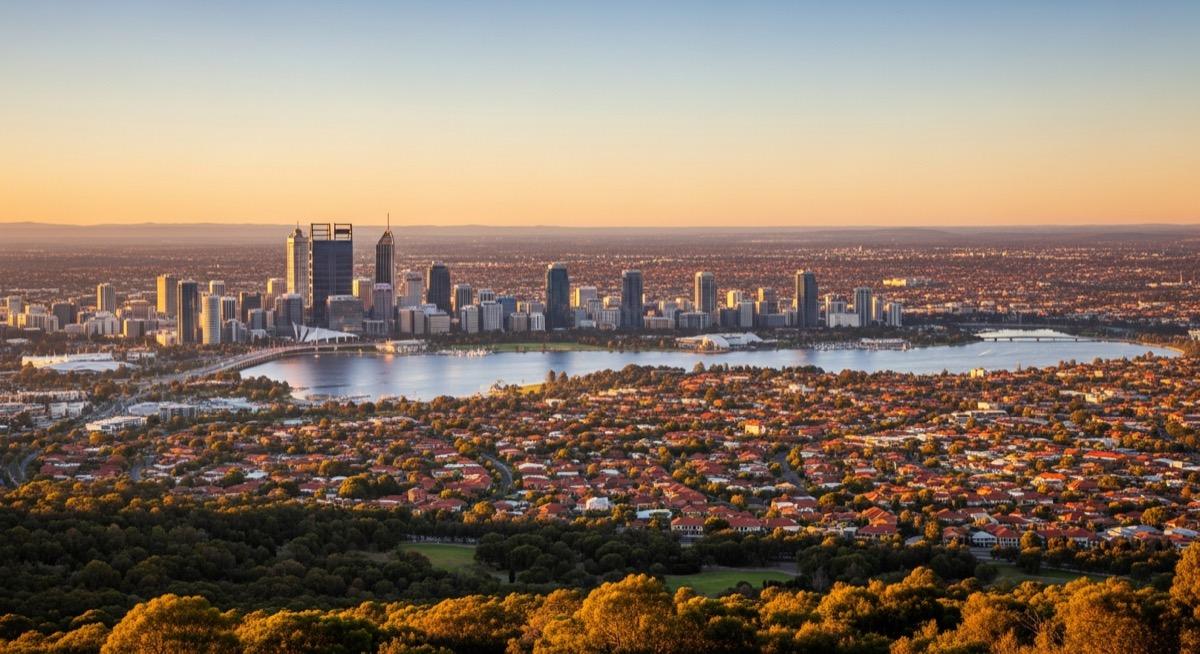
Perth Property Market Shift in 2026: What Rising Listings and Investor Sell-Offs Mean for Buyers
Perth's property market has been one of Australia's strongest performers since 2020, with median house prices in Greater Perth climbing from around $475,000 in early 2020 to over $730,000 by late 2025 — a gain of more than 53% in five years. But by early 2026, the signals are shifting. Listing volumes are climbing, days on market are stretching, and investor sell-off activity is rising in suburbs that led the boom.
For buyers who've been priced out of Perth, this could represent the first genuine opportunity in years. For investors already holding WA property, the data suggests it's time to pay closer attention to which suburbs are softening and why.
What the Perth Market Data Shows in Early 2026
The headline numbers tell a clear story. After years of extremely tight supply, Perth's property market is rebalancing:
- Active listings: REIWA reported 7,200 active Perth metro listings in March 2026, up from 5,600 a year earlier. While still below the long-term average of ~12,000, the trajectory is significant
- Days on market: Perth house median days on market hit 22 in March 2026, doubling from the record low of 11 days in mid-2024. This metric is a reliable leading indicator of price direction
- Vendor discounting: Average vendor discounting in Perth widened to -3.8% in Q1 2026, compared to -1.2% a year earlier. Sellers are increasingly accepting prices below their asking — a pattern explained in detail in our guide to understanding vendor discounting
- Auction clearance rates: Perth's small auction market saw clearance rates drop to 52% in March 2026, down from 68% a year prior
- Rental yields: Gross yields in Perth have compressed to 4.1% for houses (metro median), down from 5.2% in 2022, as price growth outpaced rental growth
None of these signals individually confirm a downturn. Together, they describe a market transitioning from acute undersupply to something closer to balance — which is exactly when the sharpest opportunities emerge.
Why Investor Sell-Offs Are Accelerating
The rise in investor-listed properties is one of the most significant trends in Perth's 2026 market. Picki data shows that suburbs with the highest concentration of investor sell-offs share common characteristics:
- Yield compression: Properties purchased in 2020–2022 at yields of 5–6% now yield 3.5–4.5% at current prices. For investors relying on positive cash flow, the maths no longer works
- Interest rate squeeze: Even with the RBA's February 2025 rate cut to 4.1%, servicing costs on variable-rate loans remain 40–60% higher than in 2021. Investors who stretched borrowing capacity during the low-rate era are feeling the pressure
- Capital gains lock-in: Many investors who bought pre-2023 are sitting on significant unrealised gains. Selling now locks in profit before any potential price correction erodes those returns
- Interstate investor retreat: Eastern states investors who bought Perth properties sight-unseen during the 2021–2023 boom are among the most active sellers, often citing difficulty managing interstate holdings
Which Perth Suburbs Are Most Exposed
Not all Perth suburbs are experiencing the same market shift. The data reveals a clear pattern: outer-ring growth corridors are softening fastest, while established inner and middle-ring suburbs remain relatively tight.
Suburbs showing the most softening
- Baldivis: Days on market up 85% year-on-year; active listings up 42%; new house-and-land packages competing with resale stock
- Ellenbrook: Vendor discounting widened to -5.1%; investor-owned listings doubled in 12 months
- Byford: Active listings up 38%; median price growth stalled at 0.3% in the March quarter after averaging 6% per quarter in 2024
- Rockingham: Gross rental yield compressed to 3.8% from 5.4% in 2022; investor exit activity rising
Suburbs holding firm
- Victoria Park / East Victoria Park: Days on market stable at 14; limited new supply; strong lifestyle amenity
- Scarborough / Doubleview: Coastal premium maintaining demand; vacancy rate below 0.5%
- Bayswater / Maylands: Train line access and gentrification activity supporting prices; limited investor sell-offs
The pattern is consistent with what Picki data shows across other Australian markets: suburbs with strong owner-occupier ratios and genuine lifestyle appeal tend to resist softening better than investor-heavy outer-ring estates. You can check this metric for WA suburbs on Mandurah and other Perth-region suburb profiles.
What This Means for Different Types of Buyers
First-home buyers and owner-occupiers
If you've been watching Perth from the sidelines, the data supports a more measured entry now than at any point in the last three years. Specifically:
- Negotiating power is returning — vendor discounting above 3% means realistic offers below asking price are being accepted
- Fewer competing bidders — auction clearance rates and shorter campaign timeframes both confirm reduced buyer urgency
- More stock to choose from — 28% more listings means better selection without the "take it or leave it" pressure of 2024
Property investors
The yield compression is real and worth calculating carefully. Before buying in Perth, run the numbers through a gross vs net yield analysis at current prices and realistic rental estimates. Key considerations:
- Avoid chasing recent capital growth in suburbs where the fundamentals (supply, yield, demand drivers) have weakened
- Look for suburbs where listing volumes are rising but vacancy rates remain tight — this signals selling pressure without rental demand collapse
- Consider which strategy suits the changing conditions: cash flow strategies may favour Perth suburbs where prices have corrected but rents remain elevated
Existing Perth property owners
If you bought pre-2023, you're likely sitting on substantial equity. The question is whether to hold through the rebalancing or lock in gains. The data doesn't suggest a crash — Perth's underlying supply deficit remains significant, with dwelling approvals still running below population-driven demand. But the days of 15–20% annual growth are over, and some outer suburbs may see flat or mildly negative returns over the next 12–24 months.
How to Use Data to Navigate the Shift
Market transitions are when data-driven analysis matters most. During a boom, almost everything goes up. During a correction, suburb selection becomes critical. Here's how to use Picki's tools effectively in the current Perth environment:
- Monitor days on market trends — This is the earliest warning signal. Suburbs where days on market are rising sharply are likely to see price softening within 3–6 months
- Track vendor discounting — Widening discounting tells you sellers are adjusting expectations. This is your negotiation leverage
- Check new listings velocity — A sustained rise in new listings without matching demand absorption indicates growing buyer's market conditions
- Cross-reference with vacancy rates — A suburb with rising listings but falling vacancies may still be fundamentally strong. The sell-off could be investor-driven rather than demand-driven
- Compare across Perth corridors — Use Picki's suburb comparison tools to see which corridors are softening fastest and which are holding
The goal isn't to time the absolute bottom — it's to identify suburbs where the risk-reward balance has shifted in your favour. Explore Perth suburb data on Picki's suburb explorer to track these metrics in real time.
The Bigger Picture: Is Perth Still a Good Investment?
Despite the near-term softening signals, Perth's medium-term fundamentals remain compelling:
- Population growth: WA recorded net interstate and overseas migration of 67,000 people in the 2025 financial year, the second-highest on record
- Dwelling shortfall: Perth's cumulative dwelling shortfall is estimated at 25,000–30,000 homes as of early 2026, with construction completions still lagging
- Resources sector: Iron ore prices above US$100/tonne and the expansion of lithium, LNG, and critical minerals projects continue to underpin WA employment and income growth
- Affordability advantage: Perth's median house price of $735,000 remains 30–40% below Sydney and 15–20% below Melbourne, maintaining its relative affordability story
The market isn't collapsing. It's normalising. For disciplined, data-informed buyers, a normalising market is often the best time to find genuine value — before the next cycle of undersupply-driven price growth begins.
Frequently Asked Questions
Is the Perth property market going to crash in 2026?
The data does not support a crash scenario. While listing volumes are rising and days on market are stretching, Perth still has a significant dwelling shortfall estimated at 25,000–30,000 homes. Population growth remains strong at over 60,000 net migrants per year. The market is rebalancing from an extreme seller's market toward more normal conditions, with price growth likely to slow or flatten in some suburbs rather than fall sharply across the board.
Which Perth suburbs are most at risk of price falls?
Outer-ring growth corridors with high investor ownership, elevated new supply from house-and-land packages, and compressed yields are most exposed. Suburbs like Baldivis, Ellenbrook, and Byford are showing the earliest signs of softening. Inner and middle-ring suburbs with strong lifestyle amenity, limited new supply, and high owner-occupier ratios are significantly more resilient.
Is now a good time to buy investment property in Perth?
For well-researched purchases in fundamentally strong suburbs, the current conditions offer more negotiating power and less competition than buyers have seen since 2021. The key is avoiding suburbs where yield compression and rising supply create a negative cash flow trap. Focus on suburbs where vacancy rates remain below 1%, days on market are stable, and population-driven demand continues to exceed new housing supply.
How long will the Perth market slowdown last?
Based on historical patterns, Perth's market rebalancing is likely to persist for 12–18 months from early 2026. The underlying dwelling shortfall and population growth suggest the slowdown is a correction within a broader growth cycle rather than the start of a prolonged downturn. The 2018–2019 Perth market provides a useful comparison: a period of flat to mildly negative growth that set the stage for the strong 2020–2025 run.
Should I sell my Perth investment property now?
This depends on your financial position, the specific suburb's outlook, and your investment timeline. Investors holding in outer-ring suburbs with compressed yields and rising holding costs may benefit from realising capital gains before further softening. Investors in tightly held inner-ring suburbs with strong rental demand may find holding through the rebalancing is the better long-term play. Run the numbers on your specific property using current yield and cash flow calculations before making a decision.